A trip to an Aberdeenshire museum surprises with an unexpected exhibition on one of the oldest examples of Scots Gaelic, made possible thanks to the object’s digitisation.
During a holiday in northeastern Scotland in September 2023, I made a trip to Aden Country Park, situated near Mintlaw in Aberdeenshire. The park plays host to a wide variety of attractions, but of particular interest to me was the Aberdeenshire Farming Museum, housed within an impressive 19th century, semi-circular farmstead building.
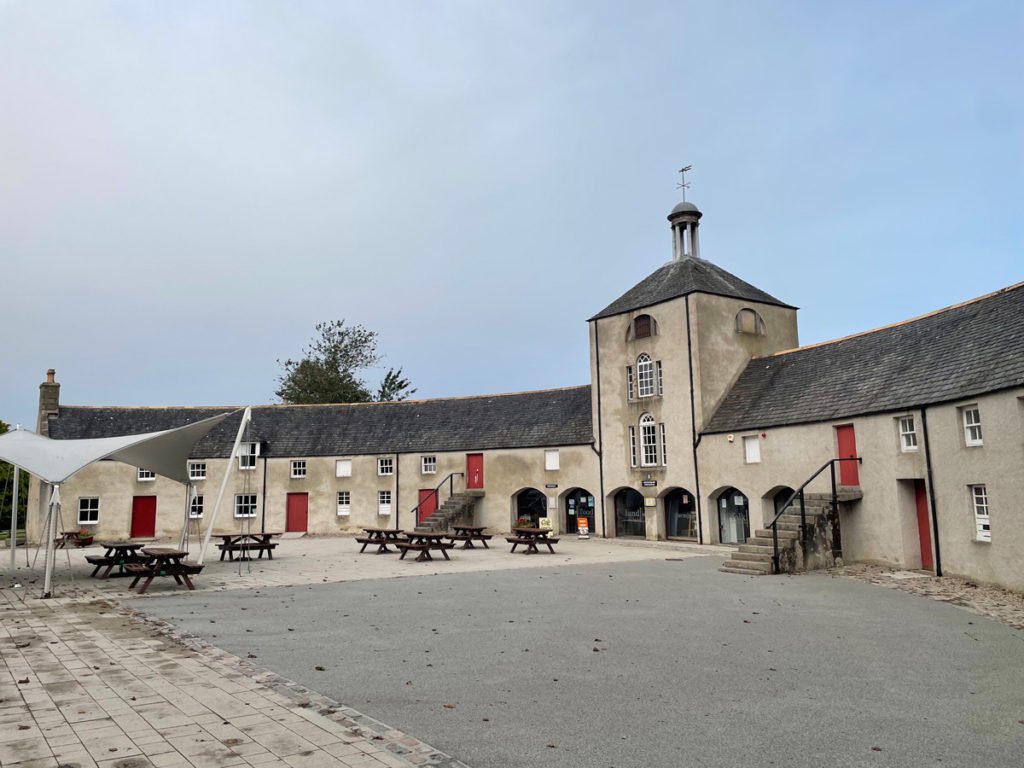
The museum is permanent host to exhibitions telling the story of the region’s farming past. The main exhibition Weel Vrocht Grun (Doric for ‘well worked ground’) documents the development of agriculture in northeast Scotland over the past two centuries, which a rich assortment of vehicles and equipment used throughout that time on display. Elsewhere, the Aden Estate Story exhibitions tell more of a living history of buildings within which the museum is contained, describing the lives of past residents and how the local land and property were once used1.
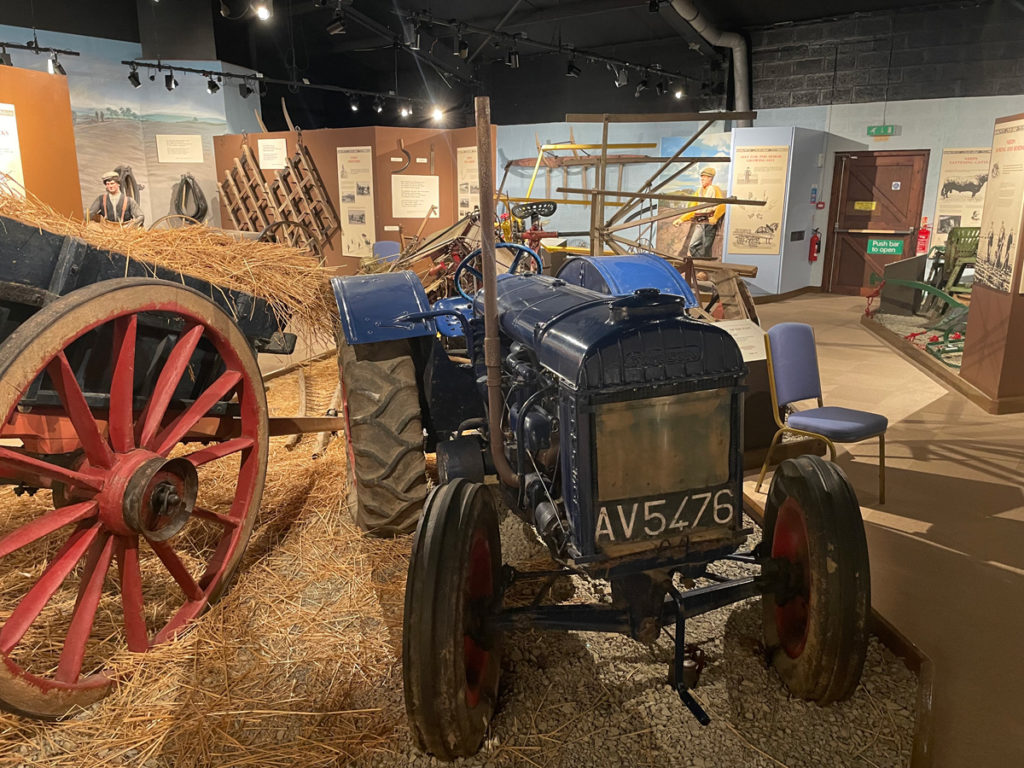
All of the aforementioned is to be expected in a museum bearing such a name. What I wasn’t expecting upon my entry to the museum, however, was to be presented with an exhibition on what is known as the Book of Deer, a diminutive 10th-century illuminated manuscript containing some of the earliest known examples of Scots Gaelic.
In summary, the Book of Deer is described as an ‘Irish Pocket Gospel Book’, measuring around the size of a postcard2. Held by Cambridge University Library since 1715 under shelfmark MS Ii.6.32, the Book was loaned to Aberdeen Art Gallery in 2022 as part of a National Lottery Heritage Fund initiative, made possible due to the enthusiastic support of the community-led The Book of Deer Project, itself based in Aden Country Park3.
The Book of Deer’s place of origin is unknown, though at one time it was held by the monks of the Monastery of Deer (not to be confused with the 13th century Deer Abbey4, founded nearby), the ruins of which are located in very close proximity to Aden Country Park, which explains the hosting of such an exhibit at Aberdeenshire Farming Museum.
The Book comprises two parts. The original gospels, copying from the Vulgate Bible, feature rich decoration in the form of full-page miniatures, borders, initials and other doodles. It is this half of the Book that is thought to originate in the 10th century5. The second half comprises entries made in the late 11th or 12th century. Six of these entries are made in Gaelic, and are believed to be the earliest known examples of Scottish Gaelic, meaning the manuscript is of immense value to Scottish culture and the study of Scottish history. The first entry tells the legend of Saint Columba and Saint Drostan’s founding of the Monastery of Deer, while the following five entries detail various gifts bestowed by local rules to the monastery at various (unknown) times.
Above: the embedded object viewer showing folio 3r of the Book of Deer. Gaelic text begins halfway down the page (with the large letter ‘C’), the beginning of the legend of the Monastery of Deer’s founding.
The later Gaelic entries in the Book of Deer are believed to have been written at the monastery while it was in their possession. For many years the existence of the original Monastery of Deer was unproven. A number of excavations have taken place over the past two decades in search for its ruins6 and the most successful of these, taking place in 2022, seems to have revealed evidence of archaeological remains including pottery, glass, and various domestic artefacts which strongly suggest the presence of an ecclesiastical institution7. This further reinforces the Book of Deer’s connection to the region.
The first part of the exhibition described the background behind the project including its various aspects with a timeline. One display described the relationship between Deer Abbey and the Book of Deer, while a table was set up containing various resources, such as printed copies of the manuscript leaves. A tall banner shows an extensive timeline pointing out various dates of relevance to the Book of Deer from the founding of the monastery, to the creation of the manuscript, its various additions, and various bits of provenantial history leading up to The Book of Deer Project’s conception and rollout.
My favourite part of this exhibition was contained in the following room, where I was taken aback by the display of six incredibly detailed textile banners drawing inspiration from illuminations and borders from the Book of Deer itself. Part of a project called ‘From Book to Banner‘, the banners were designed by local artist Rachael Jane MacDonald8. Using approximations of the pigments used in the Book of Deer itself, made using natural materials such as woad, oak gall ink, and elderberry, Rachael dyed linen and wool which was sent to a collection of volunteer stitchers across the region to put the banners together9.
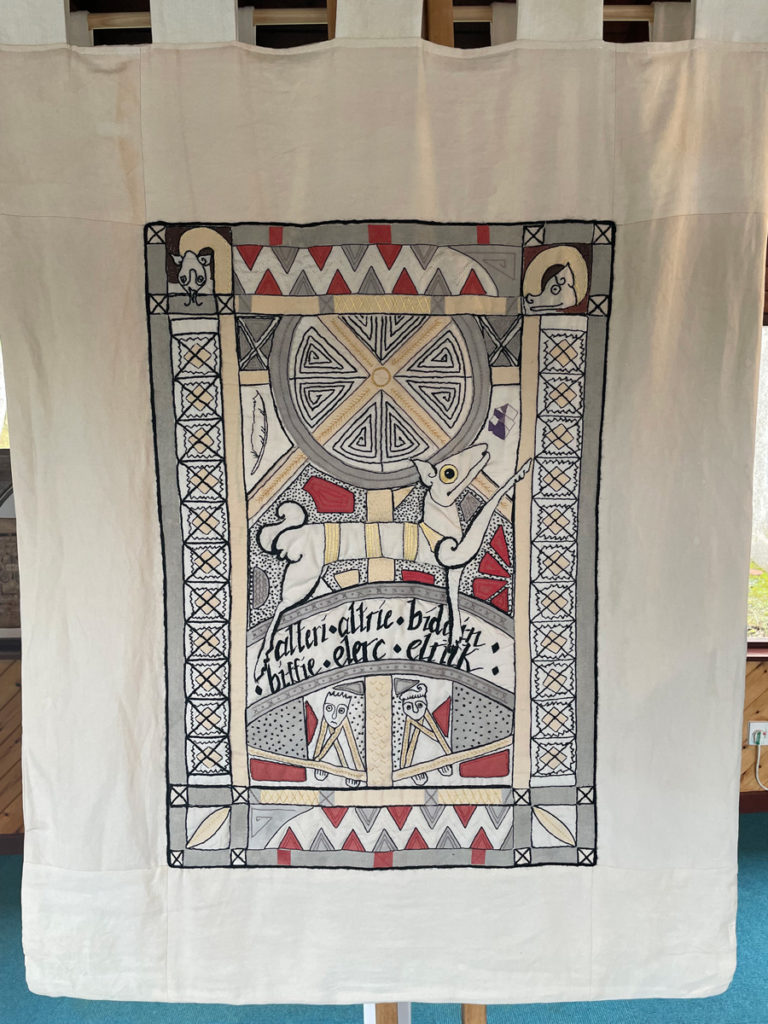
The Aberdeenshire Farming Museum never hosted the physical Book of Deer during its stay in the region, but that didn’t deter the curators from putting together an exhibition using a variety of resources and the skills of a clearly very motivated group of local volunteers. My mind went to the digitisation of the physical object: everywhere I looked around the exhibition there were reproductions of leaves from the Book, both small and large. Reproduction on this scale likely wouldn’t have been possible without digitisation, and it opened the door to being able to create a wide range of representations of the work in various formats.
It’s well worth mentioning that the amount of activities surrounding the Book’s temporary stay in Aberdeen were astounding and also included volunteering during the archaeological dig, crafts workshops, lectures, creative writing workshops, and musical performances, and much more10. I believe this project encapsulates the best of what’s possible in the heritage sector with well-considered strategy, enthusiastic promotion, and extensive community involvement.
I was so pleasantly surprised to chance upon this exhibition during my time in Scotland. It was an absolutely delight for many reasons! While an interruption of my usual programming, I wanted to share my experience while it was still fairly fresh in the memory.
Notes and references
- Blog post featured image: The Aberdeenshire Farming Museum at Aden Country Park, photograph taken by myself, © Callum McDonald.
- Blog post images: All taken by myself, © Callum McDonald.
- https://adencountrypark.org.uk/visitor-information/things-to-do/farming-museum/ ↩︎
- https://bookofdeer.co.uk/book-of-deer/ ↩︎
- https://www.cam.ac.uk/stories/book-of-deer ↩︎
- https://www.historicenvironment.scot/visit-a-place/places/deer-abbey/history/ ↩︎
- https://bookofdeer.co.uk/book-of-deer/the-gospels/ ↩︎
- https://bookofdeer.co.uk/archaeology/ ↩︎
- https://www.southampton.ac.uk/news/2023/11/deer-monastery.page ↩︎
- https://www.livelifeaberdeenshire.org.uk/live-life-at-home/book-of-deer-events/ ↩︎
- Lorna Ellis’ excellent blog post details her involvement in the project as a volunteer stitcher. ↩︎
- https://web.archive.org/web/20240103150814/https://www.aberdeencity.gov.uk/sites/default/files/2022-08/Book%20of%20Deer%20FINAL.pdf ↩︎
Leave a Reply